When designing or creating a product, service or website, the creator’s goal is to meet the users’ needs and continuously improve the quality and consistency of their work, right? We all have ideas for things we want to work towards, and once we get those ideas down on paper, they have to be reworked and refined. We brainstorm ways to improve the idea, and work to gain more knowledge on how we can better ourselves as designers.
In the Design Thinking process, personas are great tools to use to give designers some clarity about the users they are interacting with. They have been around since the mid-90s and Shlomo Goltz said they took his work to the next level (Goltz, 2014).
What is a Persona?
A persona is unique tool that gives a designer an inside look and summary on different types of users that are found to be using a product or service. Personas are created through research task and are depicted as a singular, fabricated person. The personas allow researchers to group users in manageable and memorable ways. There are different types of personas within research groups for a single service or product (Goltz, 2014).
Personas are usually created by using one-on-one interviews with people from a range of demographics (O’Connor, 2011). For example, if a grocery story wanted to create personas for their customers, you could imagine that these would be the types of personas for their user groups:
Tina (the Mom of Five)
John (the Single Workaholic)
Casey (the College Kid)
Jeff (the Stay-at-Home Dad)
Obviously, there could be more personas, but that is just a quick example. The names are not real names of the interviewees or the people helping with your research – they are created just for the persona. The “Role” or name after the name is the descriptive title that gives the researchers and creators an idea of who they are in a community.
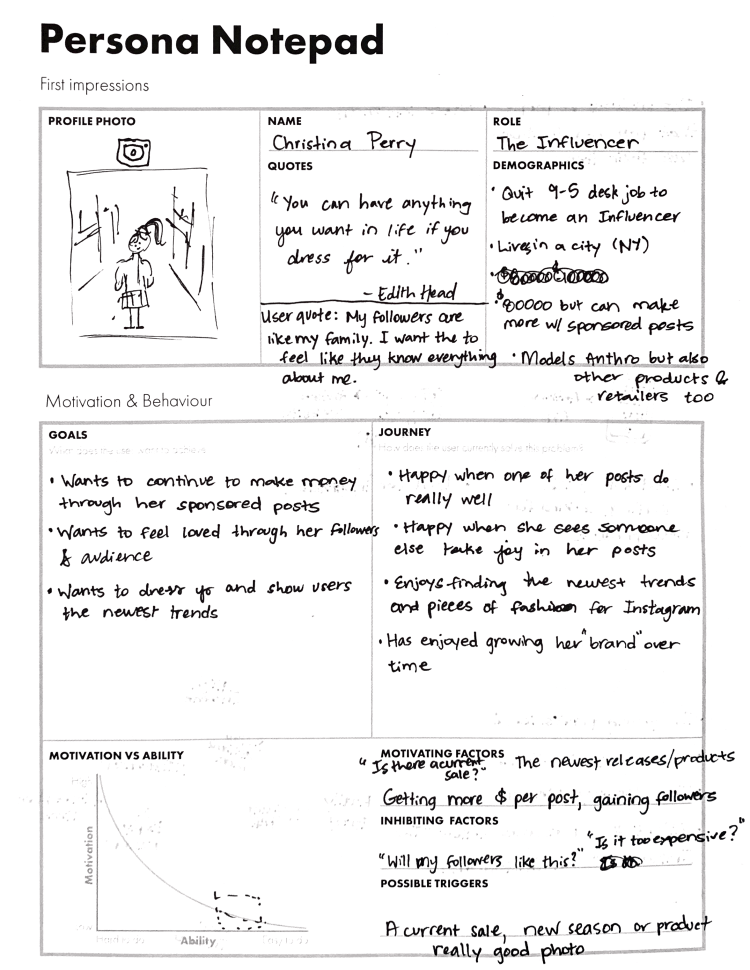
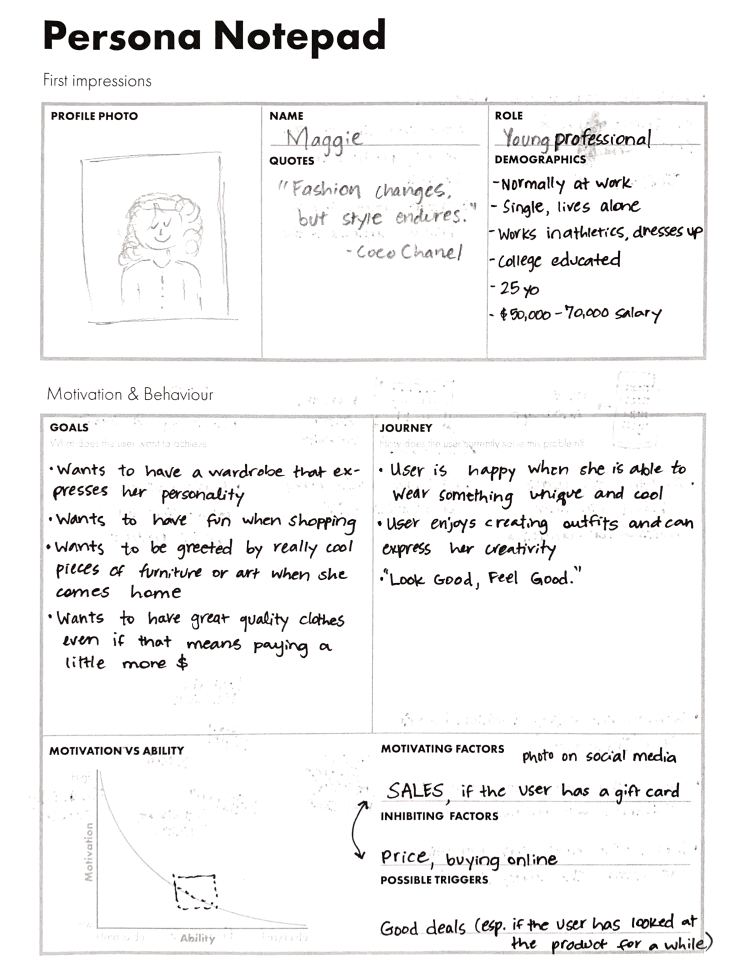
This persona “worksheet” is an excellent way to get your ideas down on paper as you create the persona. The boxes allow the researcher or creator to follow the steps and work through the ideas behind what this user needs.
How Do Creators, Researchers and Companies Use Personas?
Personas are not only great foundations for companies to use for user research and their needs, but personas can also be shared across the entire company or organization (O’Connor, 2011). The numerous aspects of a persona and what they mean can be used across the company. From the users’ demographics and goals to the user’s motivations and influencers, the entire persona can be used in some form or fashion.
The Persona of an Online Shopper
Two Persona Examples for Anthropologie.com
As an expansion on the website analysis I conducted a few weeks ago (see here), I decided to create two personas – one for myself and one for a new character – for the Anthropologie website.

Maggie – The Young Professional 
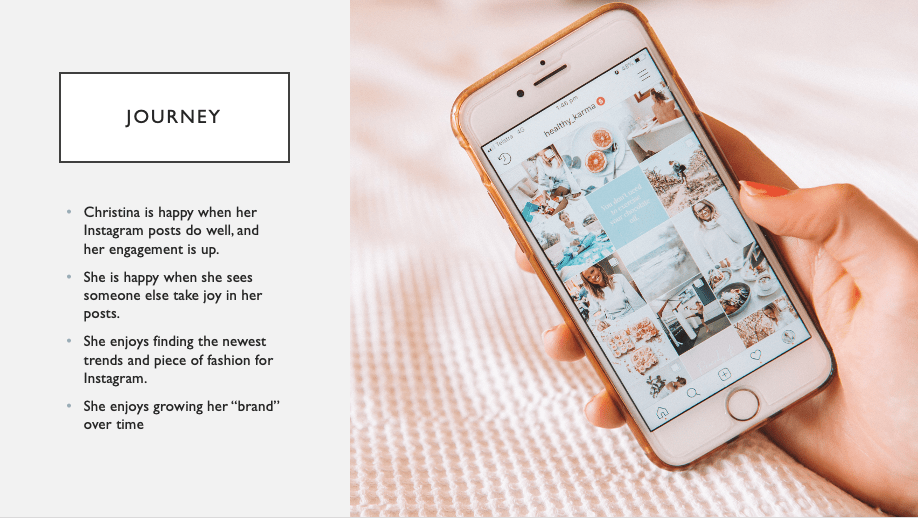
Christina – The Influencer
I am pictured on the left, and Christina, “the Influencer” is on the right. Both users have different lifestyles and needs, but they are both part of the Anthropologie family.
Creating my persona was fairly simple. Anthropologie is one of my favorite brands, so I just thought about the aspects of the company that affect, inspire or motivate me. I asked myself these questions while I created my personal persona:
How does the Anthro site affect my shopping experience?
At what times do I look at their website?
When am I more inclined to make a purchase?
I gave myself the role of the “Young Professional.” I believe I am a user that enjoys the overall experience of shopping at Anthro and their products inspire and make me happy.
The next part of this process was figuring out the other types of personas that would be utilized by Anthro. I thought about the types of people I have met at the store while shopping and while I worked there as a sales associate. I created three more users, and then developed a separate persona in addition to my own.
Christina (The Influencer)
Stacey (The Empty Nester)
Jill (The Stay-at-Home Mom)
Christina was the user I chose to create a second persona for, but all three have their own roles within this project. As I was thinking about some of my own influencers, I thought about how much social media affects my buying process. Whether it’s the photography or the influencer herself, I end up buying a lot off of an Instagram link due to the persuasiveness the app has.
Christina, the Influencer, was the perfect fit of a secondary persona. She has a completely different way of life than me, and she represents a different user for Anthro. Christina is sponsored by Anthro (most likely other brands, as well) and showcases her fashion lifestyle on Instagram.
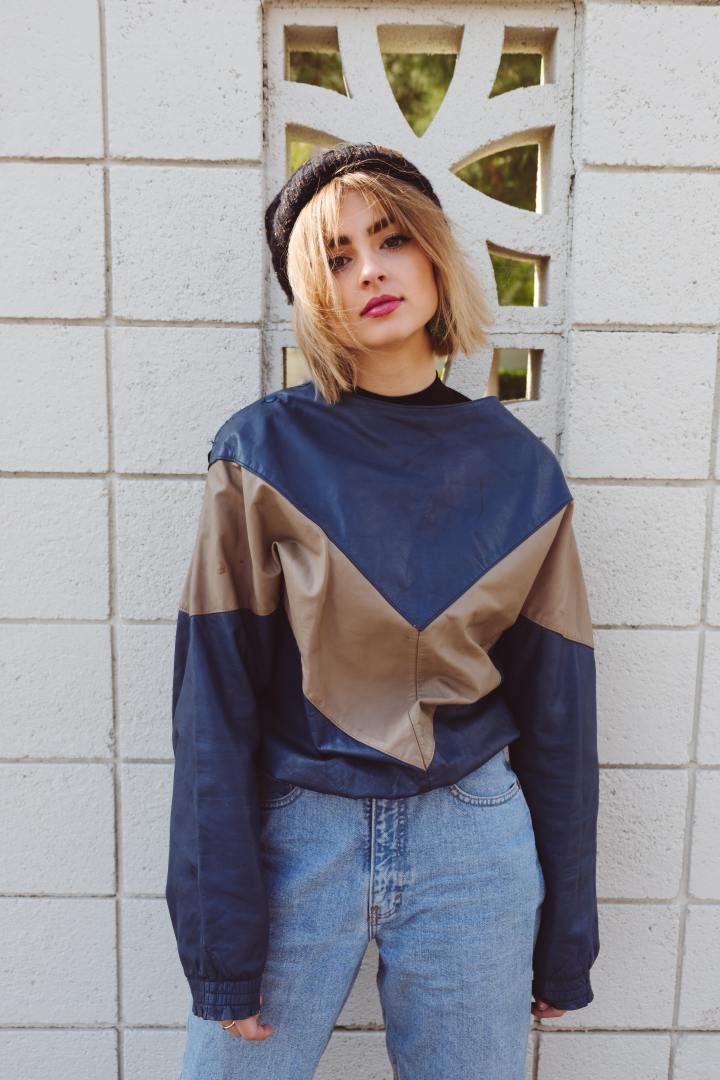
Christina was a little more difficult to create, but I was able to come up with a persona that represents her needs as an influencer and how she is important for the Anthro brand. Because she has a large following, Christina is able to work with brands like Anthro to advertise their new trends, clothing, seasons and other products.
Conclusion
Before this project, personas confused me a bit. I was never able to grasp the idea of creating a fake person and giving them all of their own unique characteristics. The persona worksheet helped me understand the process better because it was broken down. In addition, doing a persona for myself helped immensely.
Here, you can find a pdf of my personas and the information taken from the personas worksheet.
References
Goltz, S. (6 Aug. 2014). A closer look at personas: What they are and how they work. Smashing magazine. https://www.smashingmagazine.com/2014/08/a-closer-look-at-personas-part-1/
O’Connor, K. (25 March 2011). Personas: The foundation of a great user experience. Ux Magazine. https://uxmag.com/articles/personas-the-foundation-of-a-great-user-experience
Stock photos courtesy of Unsplash.
 MAGGIE PRUITT