Module IV

Chapter Readings – Chapter 10

In The Bare Bones Camera Course for Film and Video, chapter 10 explains editing as if you were driving a car. Your eyes go to a medium shot ahead, then to your rear-view mirror and then to your speed on the dash. Having a shot log will help make editing easier and more organized. 

The great underlying rule of editing is to make sure each new shot is different from the one before. Pacing is also important – too fast or slow can send the wrong message of the story you are telling. 

Research to Inform – Different Editing Styles 

In Beyoncé’s music video “Single Ladies,” the video opens with a classic fade-to-open shot. This music video uses a unique editing/shooting style. The entire video looks like it is shot in one take (invisible take) and the camera moves in a circular motion around the performers. This creates an interesting look for the viewer, and you are not sure where the background line starts or begins. 

In The Office, a documentary-style of shooting and editing is used. You see numerous zooms, pans and jump cuts to create a humorous and effective look for the shots and story. Interviews are used along with cuts to what the characters are talking about. A standard jump cut editing process is used without any dramatic transistions. 

Georgia football (Monday Motivation video) has given fans a nice throwback to football season with reposts of hype videos from the fall. This video uses really quick cuts that intersect with music in a clean way. At the beginning, the ambient sounds of the grill, the sprinklers, the cornhole bags and the field lights buzzing make you feel like you are really there. A unique transition is used right at the beginning as the voice over begins.

Articles and Examples

13 Creative Editing Techniques Every Video Editor Should Know:

-The standard cut is the most common and simple cut. It places two shots next to each other with no other transition. 

-A jump cut pushes time forward and is usually formed in the same clip.

-A montage shows a passage of time and helps tell a story with quick cuts

-A cross dissolve represents a passage of time with overlapping layers of two shots. 

-A wipe transition is used in animation that “wipes” the scene away to form the next scene.

-Fade In/Out transitions are used as a black screen fades in and out. 

-J or L cuts happen when you want to have audio fade into and overlap with the next scene.

-Cutting on action is when, well, you cut at the point of when the action occurs. 

-Cutaway Shots distract the viewer with a side shot of something away from the main scene.

-Cross Cut or Parallel Editing is when two different shots are used to show two different parts of the same scene. 

-Match Cuts are used to show viewers the next step in a scene without disorienting them. 

-Smash cuts are used in scenes where there is a dramatic flip in the story, like when a character wakes up from a dream.

-Invisible cut is when the editor uses similar shots tied together that make the scene look like it was shot in one take. 

Back to the Future 

The cuts were very quick and there was not one longer than 10 seconds. The shorter clips occurred when the man was hanging on to the clock tower. The pacing with quick for a bit and then slower and then quick again to slower. I believe this was used to show the build-up of the scene. 

Montage Project

This week we were tasked to create a quick one to three-minute montage. Due to the social distancing and shelter-in-place rules and the COVID-19 situation, I had to find something creative to show in my apartment. I used inspiration from my sunlit desk and my morning routine – my “Quar-antine,” if you will. I enjoyed capturing the shots of the candle and coffee on my desk. I added royalty free music from a website called Artist, which I use for work at Quinnipiac. 

Morning in Quarantine Video

Script 

Morning in Quarantine 

Another night

Has come and gone 

Another day

Begins again

Coffee’s brewed 

And work begins

In the light of the sun

We may be stuck

And without endings

But the light still shines everyday

Sometimes perspective 

And a changing mindset

Are all you need

To get through the next day 

Module III

Module 3 

Montage – a film technique in which a series of shots are sequenced to condense space, time and information 

Examples/Inspiration 

We have been given a good amount of montage examples. Let’s look back on little things the montages did well:

Peabody Museum – the pace of the video was very smooth and easy to follow. I liked the music and the aesthetic of the shots used. 


Top Gear – this video was humorous; it compared a not-so-great montage with an exciting one. The second montage was fast-paced and thrilling. The audio and shots made you feel like you were actually there and kept your eyes locked on the screen. 

Scottish castle – this video showed viewers the inside of a Scottish castle. I didn’t love how the shots were placed. I was a little lost as to where we were in the castle. I thought the host threw off the vibe/mood of the video by popping up every now and then. 

Thailand – This video was quiet and calm. The shots were relaxing and showed the beautiful island off. 

Intro to Chalk Art – This intro was a great example of a montage. The opening shots set the stage for the establishment and showed some really cool aspect of the restaurant. 

Top Ten Montages – Up is a great example of how a montage was used successfully. The opening story is all about the life of the two main characters – how they met, getting married, their life and then Ellie’ death. It tells this beautiful story quickly with very little dialogue. The montage mentioned from Citizen Kane is another great example – it uses the same shot with the same two people, but changes they wardrobes to show a movement of time. 

Milford Town Promo – This video encompasses all of the cool parts of a town like Milford. From the trains to city hall, the viewer gets quick look at a lot of the great parts of the city. 

Dogtown – A good restaurant montage makes you want to eat there! This one certainly did that by showcasing the food and environment of the hip Milford eatery. 

Beer commercial – This quick beer commercial created a sense of summer in a video. The cold beer with the fresh grapefruit took viewers to a place outside drinking the SWAG drink. 

Planning for a Project 

The pre-planning for a video project will help you to stay organized and on-track to complete the project. To begin, you must define your business objective and the audience for your video. Later you must create a brief and then develop a concept for the video. 

The treatment will come next. This is a document that summarizes the main idea of the project. Later a storyboard will be used to lay out your ideas. A latter step will be to analyze your distribution or where you want the project to be seen. You will then set up the production process and timeline for shooting. 

Types of Shots

There are many different types of shots that are used in videos. An aerial shot is used to show a vast location, usually from far away and in the air. An establishing shot, well, establishes where the next scene is going to take place. A close-up and extreme close-up are used to target one actor and are framed from the shoulders up.

The dolly-zoom shot is when the foreground generally stays the same while the background zooms in or out, creating a dizziness effect. The over-the-shoulder shot is used to film conversations or interviews. The master shot is sometimes confused with the establishing shot, but used to identify the characters in a scene all at once. 

Storyboarding 

Storyboarding is the act of drawing and planning the shots for a video. It should always be done before you film anything. You should include technical details, content, verbal delivery, set location and time of day in the storyboard. 

The Bare Bones Camera Course for Film and Video – Readings

Chapter 1 explains how a camera works, from the lens to exposure. The lens of a camera directs light onto the surface which senses the patterns that is created from different brightness and color. Exposure is the amount of light that is allowed to come through the lens of a camera. This chapter also explains how to set exposure on different types of cameras. When setting the exposure, be wary to not overexpose, or let in too much light. This will create a washed-out photo. Depth of field is a term that explains the look of a photo where everything is sharp and in focus. 

Chapter two is all about composition. Rule of Thirds is an idea that uses the concept of mentally dividing a frame into thirds, horizontally and vertically. Balance, angles, framing within the frame, leading lines and background all create great compositions. Balance is the concept of having a balance of mass in a photo. Angles are used to show all three dimensions – height, width and depth. Framing within a frame creates a frame around an object by using objects in the foreground. Leading lines are lines within a shot that lead the viewer’s eye in a distinct direction. Backgrounds are important as they can create a busier photo or can be blurred to put the foreground ahead in importance. 

Chapter five is about camera moves. The basic camera moves are zooms, pans and tilts. These can all be combined together. 

Chapter six is about montages. A montage is a series of shots used to convey a message or describe a scene. Having a variety of shots is important in a montage. 

Research to Inform

The Morning Show

This show has some stellar examples of framing, depth of field, close-up shots and establishing shots. Some of the best shots in the show include the skyline shots on New York City. They are breath-taking and help establish what time of day it is in the next scene (since it’s a morning show, the characters are up at all different hours of the day). 

0:16: Framing example 

1:37: Depth of field 

Mulan

The fight scene in the mountains from Disney’s Mulan has a lot of great examples of visual composition. At 0:20, the viewer sees a developing establishing shot of the enemy growing larger and larger on the top of the hill. At 0:23, the viewer then sees an example of depth of field and framing with Li Shang in the foreground. At 0:42, the viewer gets another great extreme long shot and sees the vast number of enemy fighters flying down the mountain. 

Stranger Things 

This hit Netflix show does something that is difficult to accomplish – takes the viewer back in time. The show successfully sets the scenes in the 90s. The lighting and shot selection are very important when trying to change the time of the story. At 1:23 in this video, the shot of “The Void” is an extreme long shot of one single character. 

Visual Montage Project

I will be creating a video around the Shoppes of Yale in New Haven, Conn. There is some really cool architecture in this area and I would like to showcase it to someone who is looking to visit the area. This area is in my backyard, so I am here all the time. I run around the city and get to see a lot of cool parts of Yale’s campus.

The planning part was fairly simple. The buildings and streets speak for themselves. All I will have to work with that is unpredictable when filming is the weather.

Module II

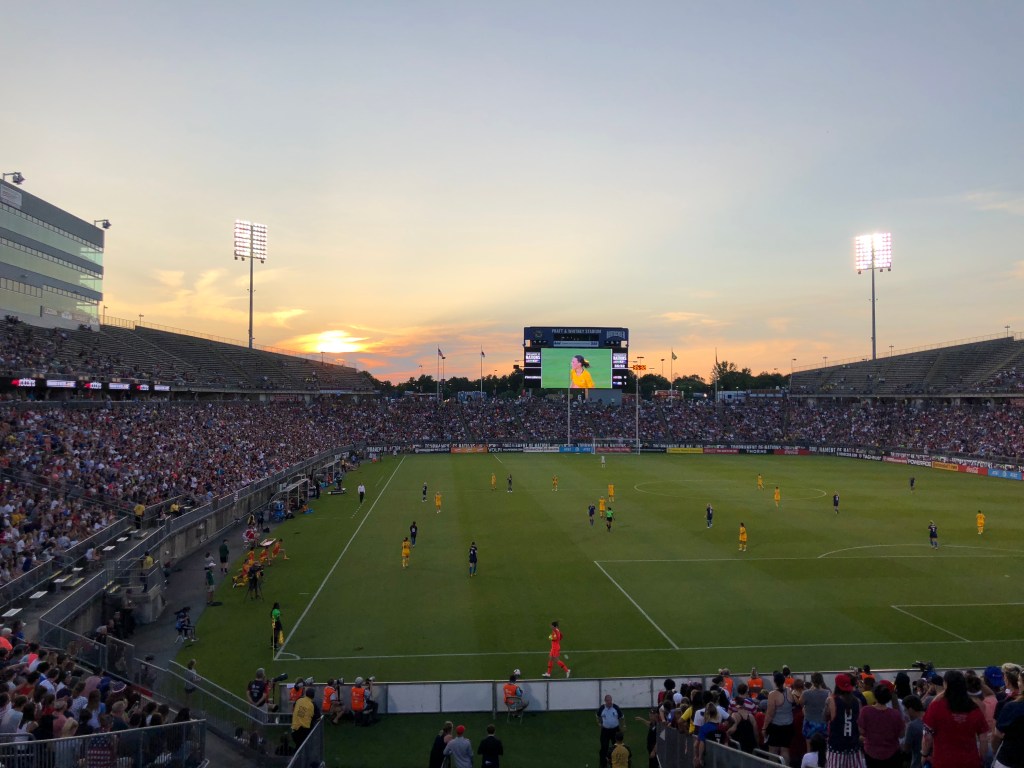
Podcast – A Brief Overview of the U.S. Women’s National Soccer Team’s Fight for Equal Pay

SoundCloud Link

Readings:

Seven Secrets for Getting Pro-Sounding Vocals on Home Recordings 

Most people do not have the option to record music or other audio projects in fancy studios. But, people want to have the same professional audio components like those fancy studios. There are a few “hacks” that can help improve audio while at home or in another non-studio setting. 

Getting in the “zone” will help improve audio right off the bat. If you do not feel like your audio is going to sound great, it probably won’t. Rooms that have little cavernous space and reverberated sound are perfect for recording. Things like beds, windows, curtains and blankets are great sound absorbers. Some people even build their own “booths” with these types of objects.

The position of your mic is also important when recording. You want to make sure the mic is tilted and you speak 2-3 inches away from the mic. One take usually isn’t enough when recording – you should do multiple takes throughout the recording process. 

Sound Advice: Editing Audio for Video

A-Roll is the primary footage you are filming, and it is essential to have in a video. B-Roll is additional footage that is shot as filler pieces that reinforce the story. 

Once a video is edited, a final step that occurs revolves around exporting the audio file to polish it. Applying some compression, limiting and equalization can go a long way.

Top Ten Best Sound Designed Films

War movies always bring the heat when it comes to sound mixing and audio, especially when you watch them in the theater. I think something interesting to remark on is how the evolution of sound has changed over the course of event the last 20 years. Looking at movies like Star Wars or Harry Potter, a viewer can truly see how sound has evolved throughout the years.

TED Talk on Sound Design 

The experiment at the beginning of the video was very interesting. I could not tell if there was a real rain sound being used or if it was all bacon frying in a pan. 

Module 1 – Audio Design I

Chapter 8 – Sound (The Bare Bones Camera Course for Film and Video)

There are many steps that a sound vibration must take in order for the message to be transmitted to our brain. The frequency and amplitude of sound waves create the type of sound we hear. 

The frequency of a sound can be high or low, depending on the distance between waves. If a frequency is high, the shriller the sound will be.  Amplitude measures the size of the sound wave. If the size of the wave is large, the sound will be louder. Frequency is measure in Hertz and amplitude is measured in decibels. 

In film and video production, there are three general types of microphones – lavalier, hand mike and shotgun. Each microphone has advantages and disadvantages, and it is up to the user to pick the best one for the situation of filming and producing. 

There are also different ways to record sounds and use them in production. A wild effect occurs when you record a sound in a closeup fashion without picture. This gives you an opportunity to use a clearer sound if needed in editing. A sync effect is a sound recorded at the same time as the picture. 

Engaging Episodes – The Powerful Podcasting Series 

It is always useful to begin creating a podcast by writing a script. An invisible script, however, helps create structure, ensures a flow, builds reputation, gives you a roadmap and cuts down on production time. 

Podcasts should be linear and follow steps. The listener should not have to jump backwards because they were confused. The flow and vibe of a podcast is very different from the written pattern like in a blog. Using contractions, short sentences and plain English without jargon helps the conversation of the podcast to flow easily. Adding personality to the podcast also helps to keep the reader entertained and locked in. 

Taglines can enhance your personal brand for your podcast – they should be short, memorable and direct. 

When planning for your podcast, creating an outline will help organize thoughts and help the flow of the show. A mind map is fun, innovative way to create an outline by drawing or using apps. Before going live, it is a good idea to read over, edit and rewrite the base of the script and outline. 

Kiwi! 

Normal: This video was an evolutionary piece that showed the timeline of stop-motion filming. Stop-motion filming is a very unique way of telling a visual story. The stop-motion refers to the producers and creators taking photos of the action in the scene and then slightly moving the scene and taking another picture. This process continues for a long period of time to create a motion effect once the pictures are edited together. This video used an increasingly dramatic song that told the story of the evolution through sound. In the more dramatic images and videos, the music was louder. I liked the storyline of this video and enjoyed seeing movies from my childhood appear.

Um, not normal: This video was really interesting. I honestly did not understand it and probably should have watched it again, but I did not want to because it made me sad. The music added a very depressing vibe. I thought the hard cuts to black and then back to the action were distracting. 

Different: After watching this video, I felt better about the story because the music was more uplifting and you felt like there was a sense of purpose and work in somewhat of a success story. The little bird always wanted to fly, made a forest and then somehow ended up with a family in the end. Even though this video was basically the same as the first, it was not as sad because of the music. 

Podcast Examples

Beyoncé’s Homecoming – NPR Pop Culture Happy Hour

I listened to this podcast in a different class and loved it. I am a big fan of Beyoncé to begin with and loved the discussion about her Homecoming Netflix documentary. This podcast used Beyoncé’s music to enhance the story line. The music was used directly over discussion at a low volume and then the volume was raised when the editors wanted the song to play alone. 

The Office Ladies 

This podcast is hosted by Jenna Fischer and Angela Kinsey from the show The Office. It is a very light podcast that incorporates interviews, sound bites and conversation to tell the stories from every single Office episode that the duo starred in. This podcast engages the listener with fun stories from the beloved show and brings special guests to talk about different segments from the episodes. 

Dream with Us | Nike Commercial | Women’s World Cup 2019

Nike has always been a brand that tells the most captivating stories in their commercials. As a female, an athlete and a fan of sports, this commercial makes me feel like I can do anything. The sound in this commercial is stunning – from the lockers slamming to the cleats grinding on the pavement, the viewer feels like they are there, running alongside the athletes. The breath floats up from the cold air and you get goosebumps. The line of athletes represents a team coming out before the game starts. It makes you feel like you are a part of something bigger than just yourself. It tells the story of the little girl looking up to someone like Mal Pugh, and it’s told all through visuals and the narration.  

Mindmap – Podcast

Closing the Pay Gap for Professional Female Athletes

Pre-Production Planning Document (PODCAST)

The topic I chose for this podcast is about closing the pay gap for professional female athletes. I chose this topic because it is something I am passionate about and it is relevant in society right now. I hope to spark a discussion with people who listen, and I hope to bring light to a topic people might not know a lot about.

Deep Work, Smartphones, and Changing Times

 How to Take Back the Control We Have Almost Lost

Deep work is the practice of limiting distractions and diving into a project or work-related activity with all efforts pointed towards that certain project (Newport, 2016). In society today, people are having difficulty concentrating on anything for longer than a few minutes due to our smartphone usage. The Technological Age has drastically changed our working models, and in turn, people are accomplishing less in the normal workday. 

Cal Newport dives into the practice of deep work and how the attention resistance could be the best step forward for people who are tired of being distracted all the time. The time has come for people to try to keep up with machines. “As intelligent machines improve, and the gap between machine and human abilities shrinks, employers are becoming increasingly likely to hire “new machines” instead of “new people,” (Newport, 23). Due to an unprecedented growth in the economy and technological world, restructuring is occurring. With this restructuring comes a divide among people in the “Intelligent Machine Age” – the high-skilled workers, the superstars and the owners (Newport, 2016). 

Siri, Where Am I?

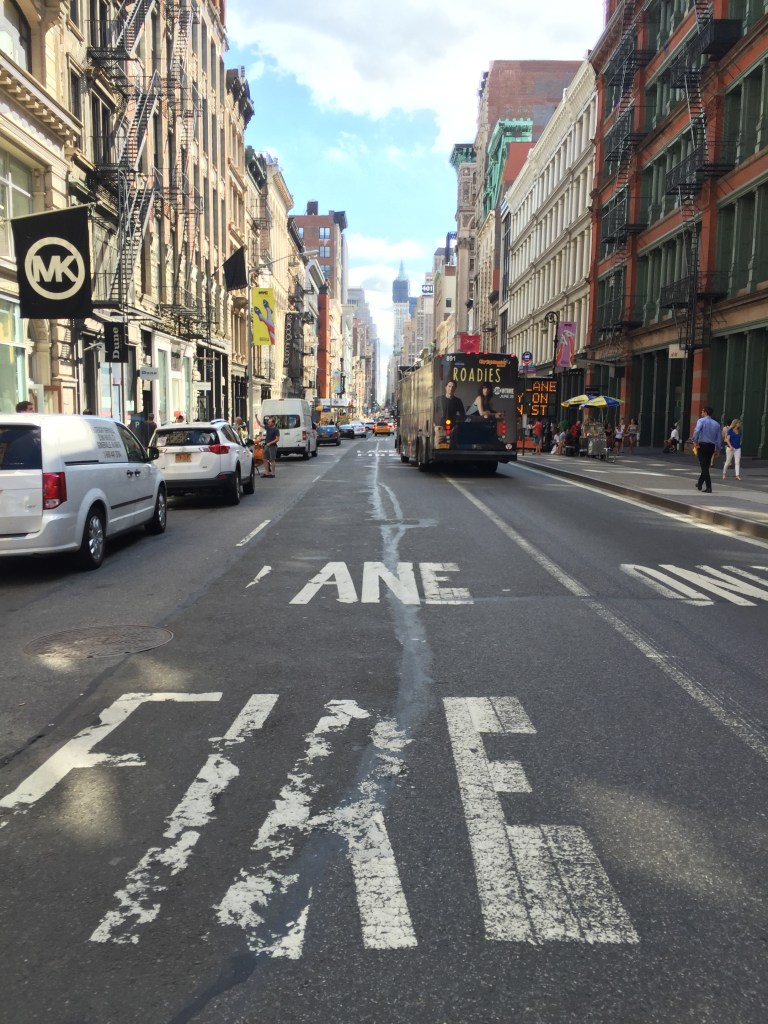
New York City is one of my favorite places in the world. I love the feeling you get when you look up at the sky and see a jumble of skyscrapers around you. I love the hustle and the madness of the city by day and night.

You can find yourself on the crowded sidewalks of Times Square or in the quieter villages of the Upper West Side. Having been to the city countless times, I feel as though I have good grasp on where things are and where I am while walking around, but I can also feel turned around a lot, too.

When I walk up the steep steps at a subway stop, I look up and sometimes know exactly where I am. Other times, I look around and can’t tell which was is north or south.

Without my iPhone, navigating a city like New York would be difficult. Google maps has helped me in so many situations – in times where I am driving to a place I’ve never been to or just looking for a place to eat. We rely on our phones for a lot of things, but knowing where we are and where we want to go are some of the most important.

Not only do we rely on the phone itself, but more importantly, we rely on the apps that make up the phone, as described by Adam Greenfield in “Sociology of the Smartphone.”

“The smartphone is not particularly useful. It can be used to make voice calls, certainly; it generally comes loaded with a clock, calendar, weather and map applications, a Web browser, and a stock ticker. But the overwhelming balance of its functionality must be downloaded from the network in the form of apps” (Greenfield, 10).

Before reading Greenfield’s explanation of this idea, I had never thought of the iPhone as just a hosting device. But, without the apps, there wouldn’t be as much of a specialized use to the iPhone. I do believe, however, one of the most exciting parts of the iPhone is the camera. It has evolved tremendously over the years, and it is one of the best parts of the phone.

The evolution of not only the camera, but the entire phone is a fascinating timeline to examine. The first iPhone was unveiled in 2007 (Greenfield, 8), and I was in the fifth grade. I distinctly remember the news of the new gadget coming out – it was so futuristic. The size, the small circles known as applications, the invisible keyboard, the touch screen.

The fact that you could touch the screen and things would move was so new and exciting. Everyone wanted one, but they were really expensive at the time. I remember not really knowing anyone my age who owned one. It was more for adults who used it for work.

The first iPhone I owned came in my junior year of high school – five years later. My friends, classmates and I went through the flip phone era before any of us had iPhones, which I am thankful for.


Has this accelerated transition of technology been for the better or for the worse? Greenfield examines this question with the idea that there probably isn’t a correct answer. I’ve found that we as humans are trained to always strive to be better and do better. We have the idea that working hard and creating news ideas is just how we function.

Is there a more efficient way to do this and to make things easier for people? How can we improve this product? How can we make our business better?

Tech companies everywhere try to answer these questions, and in turn, we arrive at where we are today, with iPhones attached to us like we are handcuffed to them.  

Dear So-and-So, Sorry for the Late Email

Now more than ever, people receive work-related alerts throughout the day and into the late hours of the night. The dam of life is open and email inboxes are flooding.

Employees are pressured into returning emails almost immediately after receiving them, including myself. (Texting has really become the new email, but we will save that for another discussion). Work efficiency is down and unread mail is up. Are companies looking to fix this?

Well, according to Clive Thompson, Adam Gazzaley and Larry Rosen, some companies are trying to help their employees out. Edelman, a public relations firm in Toronto, uses a 7-to-7 rule, where employees are encouraged to only respond or send emails during the hours of 7 a.m. to 7 p.m. (Thompson, 2014).

I thought this was a great strategy to use, but unfortunately, some companies and employees can’t always act on that rule. Time sensitive issues can arise, and a response at a late hour is occasionally required. However, I believe companies can take the time to implement some form of this rule.

In Cal Newport’s Deep Work, he emphasizes the fact that people would rather respond quickly to an email than take the time to have a meeting or talk on the phone.

“We find ourselves in distracting open offices where inboxes cannot be neglected and meetings are incessant – a setting where colleagues would rather you respond quickly to their latest e-mail than produce the best possible results” (Newport, 97).

I find this to be very true in a typical office setting. I rarely have meetings anymore, but I find that meetings are really helpful. In addition to actually sitting and talking to people that you work with, getting up and physically moving to a different space and not looking at a computer is always a good thing.

I am all for meetings, but people nowadays would rather just send you a quick email than get up and communicate out loud.

It turns out, the idea of being more efficient with fast responses on our smartphones actually makes us less efficient. It will be interesting to see what a typical office is like in five to ten years.

References

Gazzaley, A. Rosen, L. (2018, Jan. 8) Remedies for the distracted mind. Retrived from https://behavioralscientist.org/remedies-distracted-mind/

Greenfield, A. (2017). Sociology of a smartphone. Retrieved from https://longreads.com/2017/06/13/a-sociology-of-the-smartphone/

Newport, C. (2016). Deep Work. London: Grand Central Publishing.

Thompson, C. (2014, Aug. 28). End the tyranny of 24/7 email. Retrived from https://www.nytimes.com/2014/08/29/opinion/end-the-tyranny-of-24-7-email.html

Wake up Call – Sent from My iPhone

Have the Negatives of Social Media Overtaken the Benefits?

Throughout our childhoods, we flip the through pages of countless books. Books required for school reading and books for reading in a beach chair; books we love and can’t put down and books we hate and fall asleep reading at the kitchen table on a late school night.

I quickly discovered as a kid that people either love reading or hate it. There’s no middle ground. You were either the person waiting in line at a Barnes and Noble when the new Harry Potter book came out, or you weren’t.

I was the one waiting in line for The Deathly Hallows.

Growing up, I was surprised to always hear the same reaction from people about loving to read. People thought it was the worst possible way to spend free time.

“Oh, you actually like to read?”

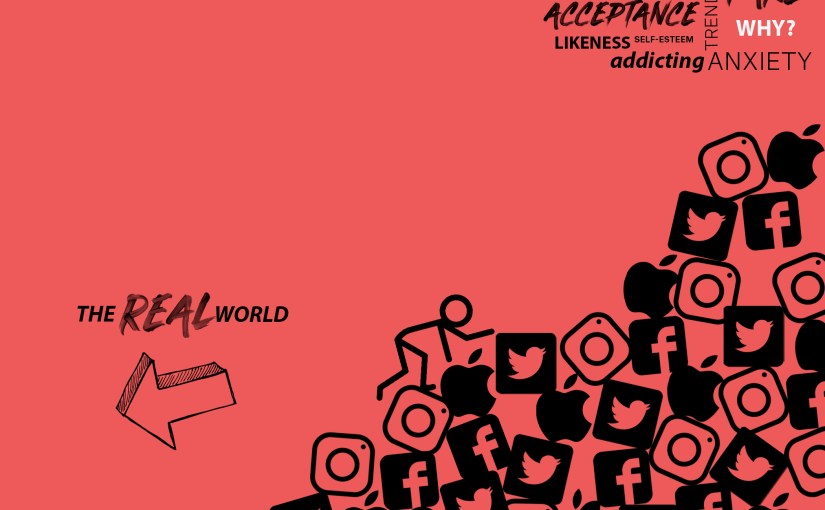
But, more recently, I have discovered that even the avid readers have replaced those best-sellers with iPhone screens. We now live in a world where we digest information by scrolling endlessly through small blocks of 240 characters or less. We read opinions from thousands of people every day, some of whom we have never met.

Even authors, who write for a living, claim to be losing their reading endurance. Michael Harris, the author of Solitude: A Singular Life in a Crowded World, believes the “screen-orientated style of reading” has detrimentally impacted our old style of reading skillset.

“…Book-oriented styles of reading opened the world to me – by closing it. And new, screen-oriented styles of reading seem to have the opposite effect: They close the world to me, by opening it (Harris, 2018, p. 2).”

Books give our imaginations a new door into new worlds we never thought possible, all through the use of language. They take us to places where no one else can be, and in a way that opens the rest of the world to us after we put the words down.

Screens have a way of closing people off from the world, by giving them an entire world of information. With the stroke of a few keys, we can find the answer to any question instantly. By having the answers at our fingertips, our attention span is completely diminished. We no longer have to make our brain work. In turn, we have lost the ability to read well.

Interestingly, we aren’t reading less. It’s more so that we are reading worse.

“In a very real way, to lose old styles of reading to lose a part of ourselves (Harris, 2018, p. 3).”

Now the Millennials ask, or at least some of us do, have the negative effects of screens and instantaneous response officially outweighed the benefits? Will our children’s children ever hold a real book in their hands?

Generation Z’ers, whose first word was “iPhone,” do not see their lives as something related to the addiction to technology. “Generation Z addresses new technology as an “extension of themselves” rather than an addiction or compulsion,” (Vigo, 2019, p. 1).

Is it too late to turn back now?

DEEP READING -> DEEP WORK

One of the best skills we learn in school is reading comprehension. We learned to sit down, take notes and remember what we are reading. We had discussions and watched films about the books we studied.

This practice was especially difficult when you hated the book you were assigned to read. There were always books in high school that just did not appeal to certain students. We all remember the books we enjoyed and the books we hated.

1984.

That was the book. The book that I despised. I can still remember the smell of the overused paperback – old, grimy and depressingly gray, just like the plot.

I read it my freshman year and always thought it was introduced too early. I understood the overwhelming theme of “Big Brother” and how this was a prediction for what our world was going to turn in to (you weren’t too far off there, Mr. Orwell), but it was a complex plot to digest as a young freshman.

Despite wanting to throw 1984 behind me and move on to whatever Shakespeare play we were going to read next, I still remember it and I remember how it made me feel – anxious, depressed, confused. But, the deep reading/work that went into that project showed that even with books you don’t love, you can still understand them and retain the information if you work hard and understand deep work.

Deep Work by Cal Newport

“As intelligent machines improve, and the gap between machine and human abilities shrinks, employers are becoming increasingly likely to hire “new machines” instead of “new people,” (Newport, 2016, p. 23).

That’s a bit daunting, isn’t it?

Due to an unprecedented growth in the economy and technological world, restructuring is occurring. With this restructuring comes a divide among people in the “Intelligent Machine Age” – the high-skilled workers, the superstars and the owners.

The high-skilled workers work well with machines, the superstars are the top-notch group people that excel at what they do and the owners have the direct access to capital.

Newport gives us a few tips to help us survive in the ever-changing technological environment that we find ourselves in every day.  

We must quickly master hard things while producing on an elite level with quality and speed.

Simple enough, right?

As a professional in the communication world, I have noticed that if you find yourself behind on “the next big thing” it is hard to catch up. The digital world changes every day, and in turn, you must also change and evolve every day.

One of the best tools you can use to stay current is YouTube. You have to be able to teach yourself as the world evolves around you, otherwise it will leave you behind…

______________

References: Cal Newport’s Deep Work; Michael Harris’ “I Have Forgotten How to Read”; Julian Vigo’s Forbes article “Generation Z and New Technology’s Effect on Culture”