With the numerous types of ideation methods, sometimes there is one that fits the need of creators and designers more than another. From brain-dumps to sketching, there are many different ways to get your ideas flowing when you come to the ideation step in the Design Thinking process.
Circling back to the POV statements I created for the Starbucks, Pandora and Aaptiv apps, I will now analyze those statements with ideation methodologies. I asked myself questions like “how can this app be polished in order to help the users” and “how can this be managed more efficiently?”. The technique that I liked the best was brain-dumping. This is why a research or designer brainstorms individually. I was able to let me ideas flow and figure out ways to improve the three apps.
Here is my Ideation Methods presentation:
Starting with Starbucks
I refined the POV statements I had originally created for the Starbucks app to make them more specific to issues users were having based on reviews from the App Store.
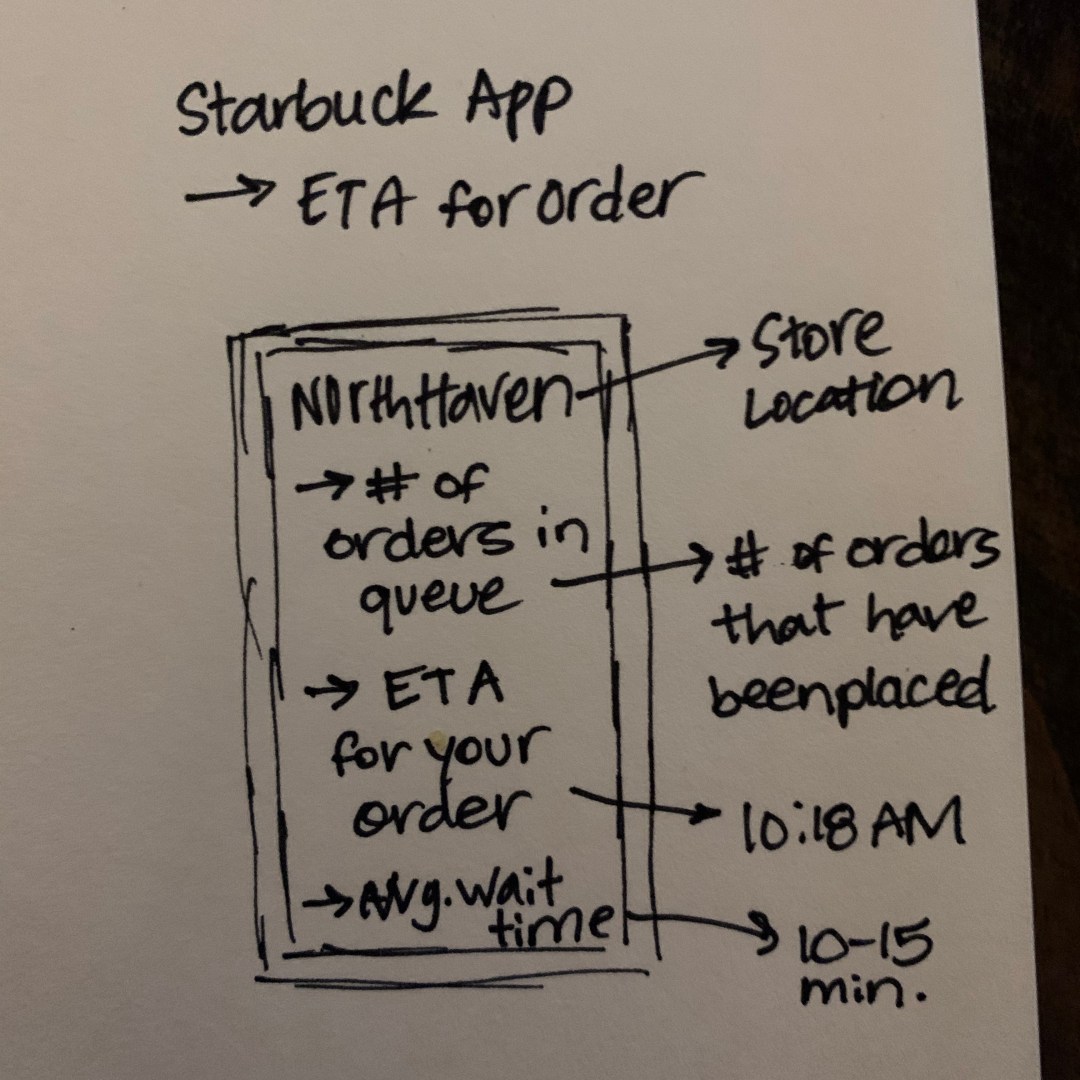
Starbucks POV #1: Users who are in a rush and want a convenient way to order coffee/food need an app that gives the user a time stamp for when the order will be ready.
Startbucks POV #2: Users who want the same experience they receive when ordering inside of a Starbucks as compared to using the app.
I used the Sketching and Brain-dump techniques to analyze these POV statements. I sketched out what the app would look like with a “New Item” page and a “Order ETA” page on the Starbucks app.


Pondering Pandora
POV Statement #1: Users who want to listen to their favorite songs without any streaming issues need to have better usability options with less bugs because the Spotify app offers a seamless streaming experience with few usability issues, if any.
POV Statement #2: Users who like to find new artists need to have an app with few glitches and ads because Pandora offers unique features that do that, but the competition has less usability issues.

For the Pandora app, I use the Challenging Assumption and Brain-dump techniques. The main problem with the free version of Pandora are the glitches and streaming issues. I tried to figure out if there is a way for the app to cut down on its clutter in order to have less glitches. In addition, I realized people have the free version of the app because they do not want to pay for the premium version. So, I wondered if there was a way to make the premium version accessible to more people.
Analyzing Aaptiv
POV Statement #1: Users who want a unique workout session/plan need an app that is not only simple, but also has plenty of options because users want to get a great workout in without the hassle.
POV Statement #2: Users who have never worked out before need an app that allows them to learn as they go and ask questions when needed because the app currently does not support a back-and-forth communication with users.
For Aaptiv, I also used the Challenging Assumptions and Brain-dump techniques to attempt to formulate ideas to make Aaptiv better for all users, but more importantly uses who don’t have workout experience. I think one of the biggest parts of the Aaptiv app that could be improved are the user-to-instructor interactions.
I created the idea that new users who sign on to the app should have a free zoom session with an instructor that allows the user to ask questions and talk about their fitness goals. The instructors can provide advice, give the users a starting point on the app and offer advice based on the user’s fitness goals. In addition, I thought it would be helpful to add a “How To” page to the app that shows videos of movements in the classes. If users are not sure how to perform a movement, they can go to the search menu, type in the movement and watch a video of someone performing the movement.

In conclusion, the ideation methodologies allowed me to expand my thinking on these apps, the problems and the potential solutions for different users.
 MAGGIE PRUITT