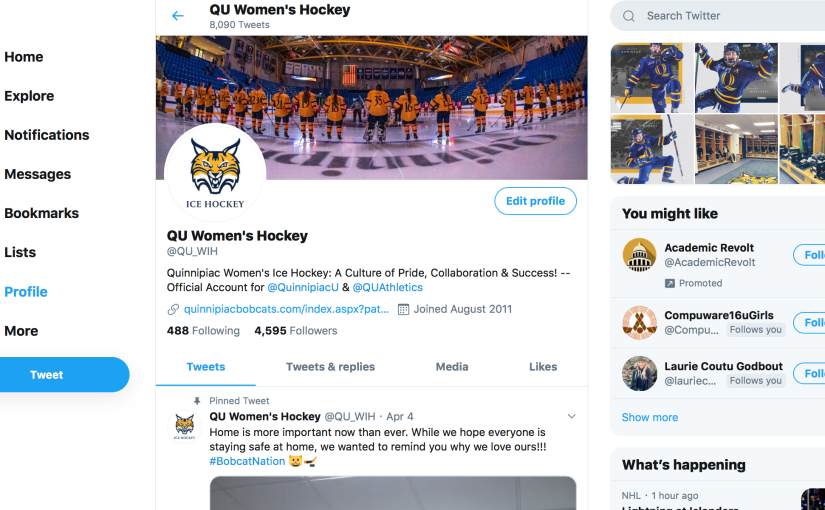
Keywords and hashtags give social media users and content creators the power to understand their brand and the trends that help improve the appearance and following numbers. I decided to analyze my work Twitter (@qu_wih) by taking some keywords related to the account and using Sprout Social to see what I could learn about the account’s analytics.
I picked five keywords to compare: ice hockey, Connecticut, female athletes, recruiting & bobcats.
Sprout Social lets users pick keywords and adjust the time line that the user would like to analyze. I set the timing to be analyzed between Aug. 16 and Sept. 12. The five keywords I picked are all tied into the brand that is Quinnipiac Ice Hockey, but they all have different weights related to our own content. Obviously, Connecticut and recruiting are more broad topics, and ice hockey, female athletes and bobcats are more specific.
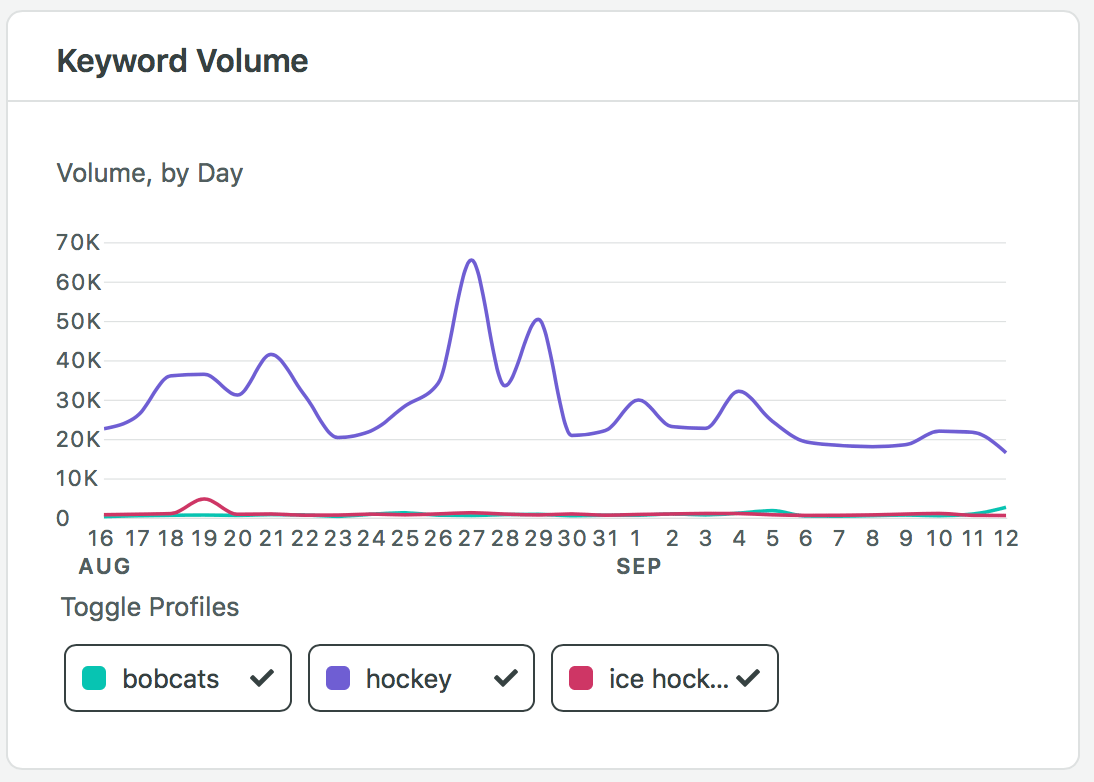
The photo below shows the Keyword Volume from Sprout Social. From the graph, we can see that the far-reaching keywords of Connecticut and recruiting had the most volume by day on average.

Interestingly, the two-day period of Aug. 19-20 had some consistent volume from Connecticut, ice hockey and recruiting. Recruiting had its best day of the 28-day period with over 57,000 volume numbers. In addition, ice hockey had its best day with over 4,000 volume numbers. I believe the spike for ice hockey could be related to the NHL playoffs going on during that time. As for recruiting, an NCAA announcement or change in COVID-19 rules from the NCAA could have impacted the high spike in volume. Connecticut had a moderate spike the next day, and I believe this could be related to announcements about returning to school in Connecticut.
From Sept. 7-10, female athletes had its two biggest spikes of the 28-day period. This uptick could be attributed to many different pieces of content and national stories about female athletes. Naomi Osaka and Serena Williams were competing in the U.S. Open and the WNBA playoffs are in full swing this past week.
Bobcats, which was the most specific keyword to the Twitter account, was fairly consistent throughout the 28-day period; it received 2% of the total amount volume from all five words and averaged 811 per day.
Connecticut also had a huge spike on Sept. 11. This could be related to content from the protests that were happening in New Haven, Conn., regarding high school football cancellations.
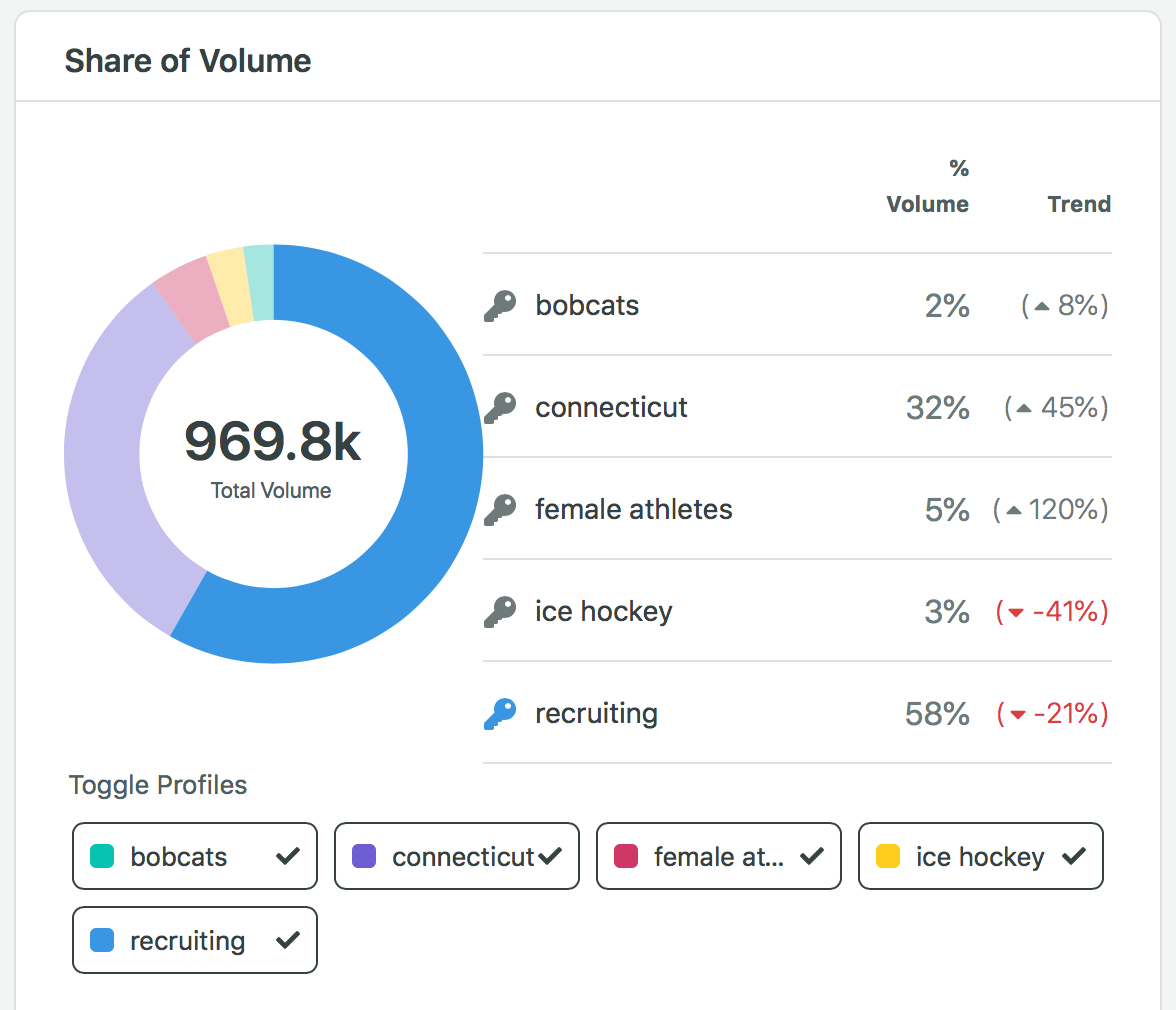
The Share of Volume numbers are shown below. Recruiting took up over half of the volume at 58%, followed by Connecticut with 32%.
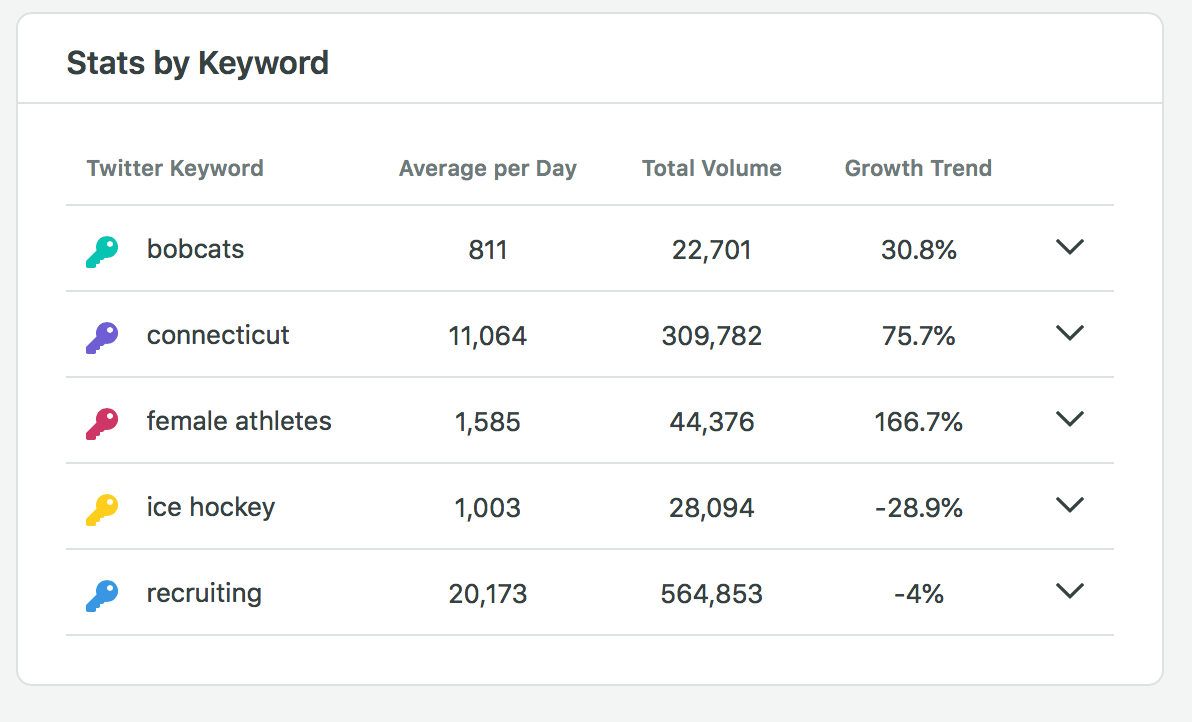
In addition, Sprout Social lets users look at the stats from each keyword. Female athletes had a 166.8% increase and had the third-most total volume out of the keywords I chose. Ice hockey and bobcats were the least popular keywords, making up only 5% of the total volume.
One question I asked myself after analyzing the volume numbers and stats was about the word bobcat and ice hockey. In relation to Quinnipiac, Bobcat, with a capital “B” would actually pop up more than just bobcat, with a lower-cased “b”. Does a capital letter make a difference? In addition, in the ice hockey world, “ice hockey” is not used as much as “hockey” by itself. Would “hockey” have been a better word to target?
I looked into these questions on Sprout Social. It turns out, there is no difference in their analytics between “Bobcats” and “bobcats”. But, the term “hockey” ended up having much better analytics and volume numbers than “ice hockey”.
In conclusion, keywords can help social media managers learn a lot about their audience and what is popular at specific times. If a word is broad, however, it may be difficult to draw any direct conclusions based on the large volume numbers.
 MAGGIE PRUITT