
Seven weeks came and went. One project with a goal of helping collegiate student-athletes was completed. Ideas and information were developed and polished and a booklet was created.
I learned a lot through this process. The idea of the booklet at the beginning was so different from the final product I made in the end, which taught me a great lesson. Most of the time, the idea we have in our head when it comes to a project, a plan, a goal or even a job ends up being completely different than we what we expected. That’s part of the process and how we grow as individuals and professionals.
The first draft will not look anything like the final draft, and sometimes the smallest turn of inspiration helps lead you to where you need to go and takes you down a path you hadn’t thought of before.
I learned about a few cool tools that helped me create my booklet and take it to a different level. Unsplash is a free website where artists and photographers share their photos with the world. There are millions of photos on this site that are high quality and free! The Noun Project is also another great tool that provides free icons to users to use with just minimum attribution.
Within this process, I also learned more about the printing process for books/magazines/booklets. InDesign has a feature that is really cool for printing booklets. You are able to take your InDesign pages that you have designed (probably ordered numerically) and then InDesign reformats a booklet PDF file with your pages imposed This means that your new PDF file will have the pages ready for print – page one is with the very last page, page 2 is paired with the second-to-last-page, etc.

This was a complicated process for me to figure out. I didn’t think about the process printing until the end of the project. In the end, I ended up printing my booklet on 8.5 x 11 sized paper but with two pages of the booklet printed on one single piece of paper. So, when the pages print, the first page needs to print with the last page because the paper is folded to create the booklet. It was a little difficult to figure out (Shoutout to YouTube) but in the end, I was happy with the final product.
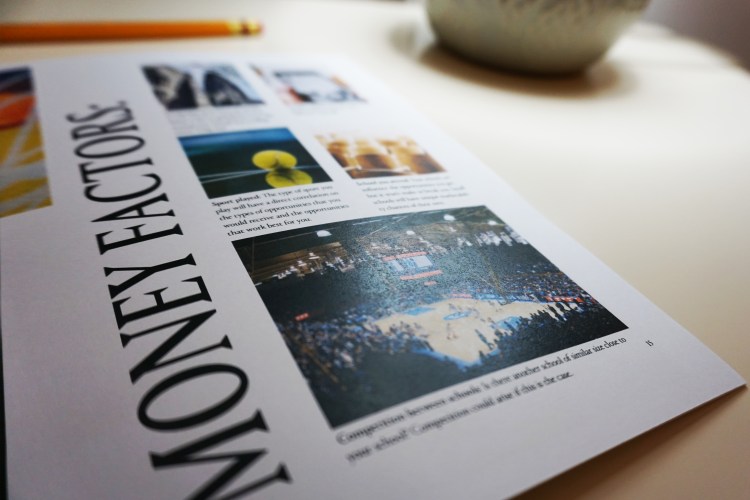
Over the last couple of weeks, I have also reflected on my job, college sports and how they are going to change over the next few months and years. With help from some of my athletes at Quinnipiac, I discovered what they view the name, image and likeness ruling as and how they intend to use it. For the most part, the athletes that I talked to would not want the distraction of having a separate side hustle while playing a Division I sport. Individually, the players don’t have a desire to make money and would rather focus on their sport and school. And honestly, with those two things alone, collegiate athletes really don’t have extra time in general.
With that said, I’ve researched about the name, image and likeness ruling for the past seven weeks and know a lot about it now. But, I’ve concluded that with the introduction of the rulings next fall, I don’t foresee a lot of athletes getting involved in outside sponsorships right away. I truly think that these rules will only affect a small number of athletes in the NCAA – the Zion Williamsons of collegiate athletics. The athletes that have the potential to make hundreds of thousands of dollars.
Now, this doesn’t mean that athletes who don’t have as big of a marketability won’t try to make money; they definitely will. But, I think for the amount of debate that this issue has brought to the NCAA, conferences and media, the end result won’t have a dramatic effect right away.
Five years from now, however, the landscape of college sports could look very different. With any type of new ruling or legislation, it will take time to see how it will truly fit into the world.
In my opinion, the heated and drawn-out debates about whether to implement this ruling or not was much more dramatic and visible than the actual application will be. I think this is due to the confusing nature that the NCAA guardrails will hold and how student-athletes are able to interpret them.
In addition, every student-athlete will have a different situation. Permissibility will be determined on a case-by-case basis.
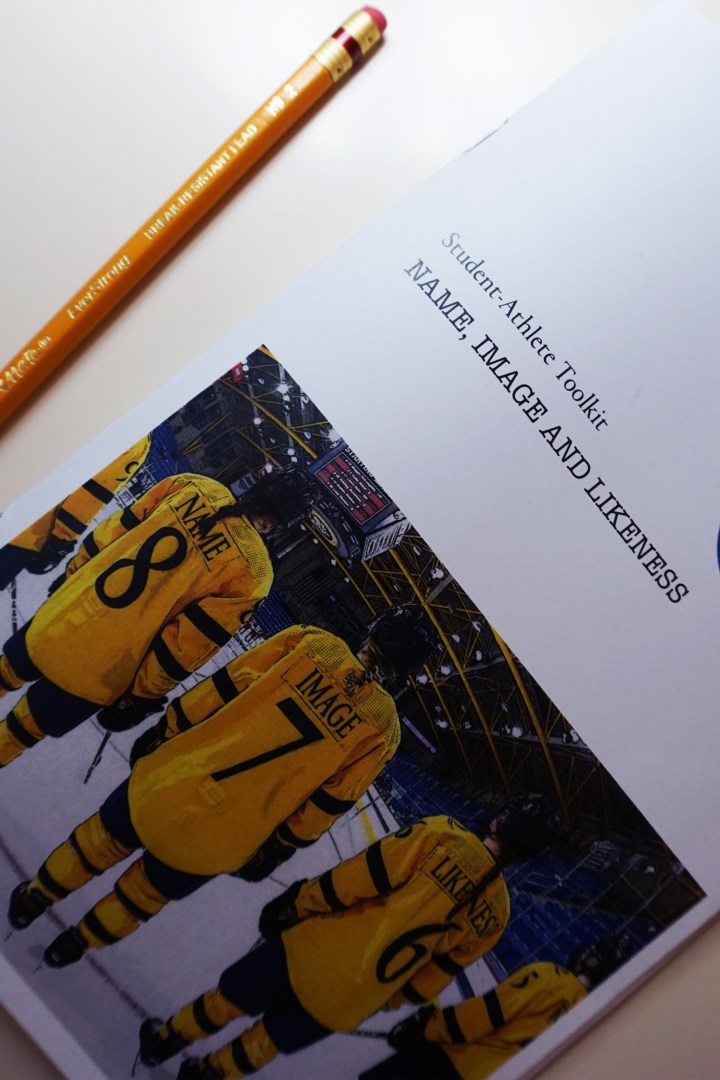
So, if the Student-Athlete Toolkit on Name, Image and Likeness helps student-athletes understand what opportunities they have and the best ways to go about taking advantage of those opportunities, then that will be a success in my book.
 MAGGIE PRUITT